
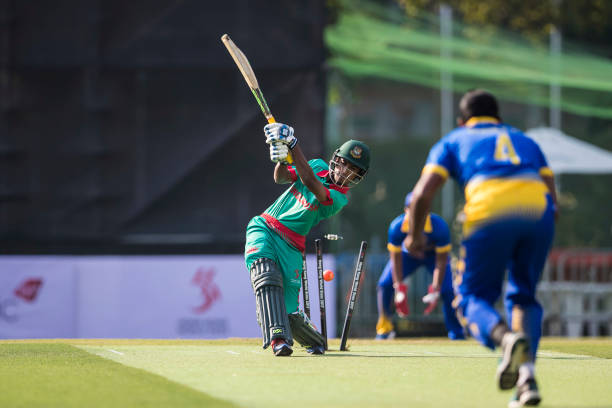
Hong Kong vs. Bangladesh:
Introduction
Hong Kong and Bangladesh are two Asian regions with distinct identities, histories, and development trajectories. While Hong Kong is a global financial hub known for its high standard of living and capitalist economy, Bangladesh is a developing South Asian nation making rapid progress in manufacturing and socio-economic indicators. This essay explores the major differences and similarities between Hong Kong and Bangladesh across several dimensions, including geography, economy, governance, culture, and development.
Geography and Demographics
Hong Kong is a Special Administrative Region (SAR) of China located on the southeastern coast of the country. With a land area of about 1,104 square kilometers, it is relatively small but densely populated, home to over 7 million people. Its geography features a mix of urban skyscrapers, hilly terrain, and coastal areas.
Bangladesh, by contrast, is a sovereign country in South Asia bordered by India and Myanmar, with a significantly larger area of approximately 147,570 square kilometers and a population exceeding 170 million, making it one of the most densely populated countries in the world. Bangladesh consists largely of flat, fertile river deltas.
Political Systems
Hong Kong operates under the “One Country, Two Systems” principle, which allows it a certain degree of autonomy from mainland China, including its own legal and economic systems. It has a Chief Executive as its head of government, and its governance is influenced heavily by Beijing. In recent years, political unrest and debates about democracy and autonomy have escalated.
Bangladesh is a parliamentary democracy with a president as the ceremonial head of state and a prime minister as the head of government. Since its independence in 1971, Bangladesh has experienced periods of military rule and political instability but has remained a sovereign democracy, with regular elections and an active civil society, despite ongoing challenges related to corruption and governance.
Economic Comparison
Hong Kong boasts one of the most advanced and free-market economies in the world. It is a global center for finance, trade, and logistics. The GDP per capita in Hong Kong is over $49,000 (as of 2024), reflecting a high-income economy. It ranks high on indices of economic freedom and ease of doing business.
Bangladesh, on the other hand, is a lower-middle-income country, but it has shown impressive economic growth over the past two decades. With a GDP per capita of around $2,700 (2024 estimate), it remains a developing country. However, its ready-made garments (RMG) industry has become the second-largest in the world, contributing significantly to exports and employment. The country also has a growing IT and service sector.
Social Development and Infrastructure
Hong Kong has a high standard of living, excellent infrastructure, modern public transport, and high-quality healthcare and education systems. Life expectancy is high, and the Human Development Index (HDI) is among the best in Asia.
In contrast, Bangladesh has made substantial progress in human development indicators, especially in healthcare, literacy, and life expectancy, despite limited resources. Its HDI is lower than Hong Kong’s but has steadily improved. Urban infrastructure in cities like Dhaka is under strain due to overpopulation and rapid urbanization, but efforts are ongoing to improve roads, sanitation, and public services.
Culture and Society
Culturally, Hong Kong is a blend of East and West due to its colonial history under British rule. It retains Chinese traditions but is also strongly influenced by Western legal, educational, and business practices. Cantonese is the primary language, and the society is highly urbanized and consumer-driven.
Bangladesh has a rich and ancient Bengali culture, deeply rooted in language, literature, music, and festivals. Islam is the predominant religion, shaping social norms and traditions. Rural life remains prominent, although urban culture is growing. The national language is Bengali, and the society is generally more conservative compared to Hong Kong.
Education and Innovation
Hong Kong has a highly competitive and advanced education system, with strong emphasis on STEM and international standards. Universities like the University of Hong Kong and the Hong Kong University of Science and Technology are globally recognized.
Bangladesh has made notable strides in expanding access to primary and secondary education, with gender parity nearly achieved. However, the higher education system still faces challenges in quality, infrastructure, and research output, although improvements are underway with growing private universities and investment in education technology.

Challenges and Opportunities
Both regions face significant challenges:
- Hong Kong struggles with housing affordability, income inequality, and political tensions with Beijing, which have led to protests and concerns about freedom of expression and democracy.
- Bangladesh contends with issues such as corruption, infrastructure gaps, climate vulnerability, and poverty, though these are being addressed through national development strategies like Vision 2041.
Opportunities lie in leveraging their respective strengths: Hong Kong can continue to serve as a gateway between China and the world, while Bangladesh can harness its young population and strategic location to become a regional economic powerhouse.
Conclusion
While Hong Kong and Bangladesh are both situated in Asia, they represent vastly different paths of development, governance, and socio-economic structure. Hong Kong is a high-income, service-based economy with global integration, while Bangladesh is a rising manufacturing hub with a rapidly developing economy. Each faces unique challenges but also possesses distinct strengths. Their comparative study highlights the diversity within Asia and offers valuable insights into the varied routes to progress in the 21st century.